Surviving the Music Royalties Black Box: The Publishing, Master Recording, and Metadata Crisis And Why Creators Must Lead the Next Evolution
After more than 20 years working across the music industry as a producer, songwriter, label partner, and educator I’ve come to understand something most creators learn far too late:
The royalty system was never built to protect us.
It was built to distract us.
The publishing side is chaotic. The master recording side is worse. And the metadata that ties both together is so fragile that a single mistake can erase years of income without leaving a trace.
For me, these aren’t theories. As a producer and songwriter whose records have sold millions of copies, these are lived experiences.
I’ve seen statements that didn’t reflect the contracts they were based on.
I’ve seen earnings classified incorrectly for decades.
I’ve seen distributors claim ownership over music I created.
I’ve seen metadata errors block payouts entirely.
I’ve seen producers unknowingly abandon royalties because the system made it too hard to chase.
And when I realized the traditional process wasn’t enough, I did something different:
I used AI tools to uncover mistakes and discrepancies the industry overlooked.
It opened my eyes not only to how deep the problems go, but how urgently creators need to lead the conversation about fixing them.
The Publishing Side: A Maze of Conflicting Truths
Most creators assume publishing is the simpler side of royalties. It isn’t.
Behind the scenes, there are:
-
Conflicting registrations.
-
Incomplete splits.
-
Multiple PRO databases.
-
Human entry errors.
-
Missing IPI/CAE data.
-
Delayed ingestion.
-
Unmatched earnings sitting untouched.
The entire process relies on a sequence of manual steps across organizations that don’t communicate.
And when they disagree, creators suffer in silence.
I’ve spent years resolving issues that should have been handled automatically:
-
Songs published without all writers listed.
-
Split sheets never reflected correctly.
-
Catalog entries with missing identifiers.
-
Historical data lost across transitions.
Publishing is a patchwork of legacy systems held together by copy-and-paste workflows.
Creators deserve better.
The Part No One Talks About: The Master Recording Royalty Crisis
Publishing gets the attention.
Master recording royalties get the damage.
Here are the issues creators rarely discuss but face constantly:
1. ISRC errors that cause streams to be paid to the wrong entity
A single incorrect code can break an entire royalty trail.
2. Producers given incorrect royalty rates.
Because no valid agreement exists yet labels “estimate” the payouts. Yes, I’ve lived that.
3. Content ID conflicts that override the creator’s ownership.
I’ve seen distributors claim music I produced and delivered myself.
4. Legacy masters generating money.
But falling into “unclassified” buckets that never reach the creator. Yes, we’ve seen that too.
5. Statement math that simply doesn’t match the contract it came from.
A problem only visible if you review decades of accounting. These issues are so widespread that most creators assume they’re unavoidable.
They’re not.
They’re symptoms of a system that never modernized.
Where AI Opened My Eyes
When discrepancies kept showing up in statements, contracts, and registrations, I decided I was done waiting on slow internal processes.
I fed the data through modern tools that could:
-
Compare payout structures.
-
Analyze historical trends.
-
Detect inconsistencies.
-
Recalculate earnings.
-
Spot missing metadata.
-
Flag mismatched identifiers.
-
Highlight potential underpayments.
-
Map contradictions across PRO, publisher, and distributor reports.
And the results were clear:
AI revealed problems that humans had overlooked for years.
It didn’t replace my industry knowledge.
It validated it.
It amplified it.
It sharpened it.
And it proved something I had suspected:
The royalty black box isn’t just broken, it’s invisible to the people who are supposed to operate it.
Creators have more power today than ever before, if they know how to use the tools available to them.
Publishing + Masters Must Be Understood Together Not Separately
One of the biggest flaws in the music business is the idea that the publishing and master sides are independent.
In reality:
-
A publishing registration error eventually impacts masters.
-
A master ingestion error eventually disrupts publishing.
-
Missing metadata destroys both.
-
Incorrect splits ruin both.
-
Mislabeled ISRCs misdirect both.
-
Bad agreements confuse both sides for decades
They are two halves of the same paycheck.
But the industry treats them as two separate worlds.
Creators need people who understand the entire ecosystem, not just one side of it.
And that’s where I’ve found myself over the years:
In both worlds, fighting the same battles from different angles.
Why I’m Speaking Out Now
This isn’t about building a platform.
It’s not about promoting any technology.
It’s not about pointing fingers.
It’s not about rewriting history.
It’s about telling the truth. Creators are the backbone of this industry, yet they understand the least about how their money moves.
I’ve spent decades:
-
Resolving publishing discrepancies.
-
Untangling master-side mistakes.
-
Studying metadata failures.
-
Comparing statements against contracts.
-
Teaching creators how royalties really work.
-
Using modern technology to uncover hidden errors.
Those experiences have shaped me into someone who sees the royalty landscape clearly at a time when visibility matters more than ever.
The Future Belongs to Those Who Understand the Past AND the Technology Driving the Future
People often think the future of the music industry will be built solely by technologists, executives, and engineers.
But the truth is:
The next evolution of rights and royalties will be led by people who understand BOTH the pain and the potential.
Creators who have:
-
Navigated publishing disputes.
-
Survived master-side errors.
-
Untangled metadata failures.
-
Fought for correct royalty payouts.
-
Used modern tools to expose problems.
-
Educated others on how the system works.
-
Adapted to new technology as it emerged.
People who aren’t theorizing they’re living it.
People who know where the bodies are buried because the system buried their money too.
People who have the credibility to talk about the past and the technical awareness to help shape the future.
Closing Thought
I’ve fought my way through a royalty landscape built to confuse creators.
I’ve survived publishing chaos and master-side misfires.
I’ve uncovered discrepancies using tools that didn’t exist a decade ago.
And I’ve helped thousands of emerging artists make sense of the system.
I’m committed to continuing that work, not as a commentator on the sidelines,
but as someone helping move the industry toward something more accurate,
more transparent, and more creator-centered.
Because creators deserve clarity. Creators deserve accuracy.
Creators deserve modern systems built with their realities in mind.
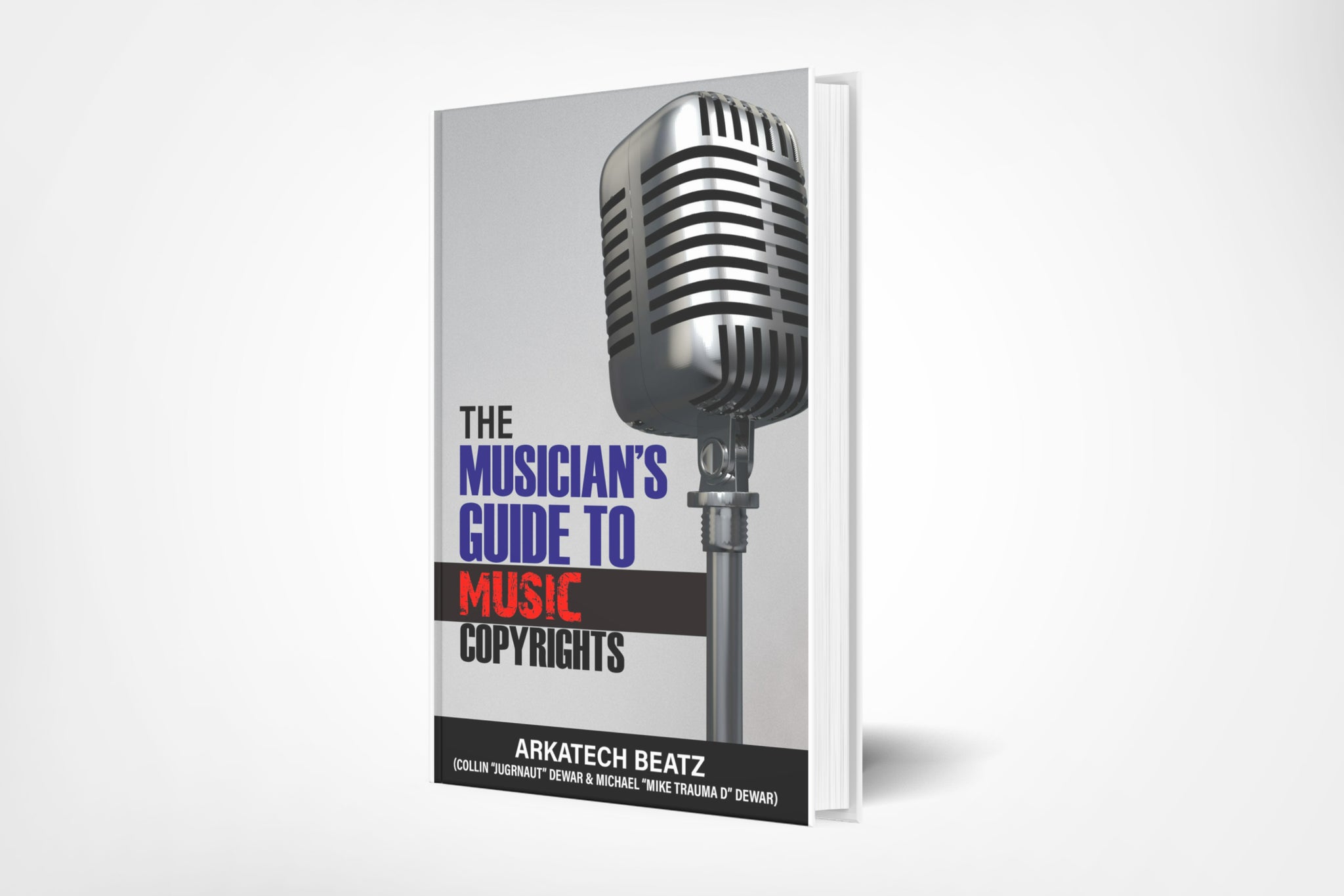
Written By Collin "Jugrnaut" Dewar - Co-Founder of Arkatech Beatz: Multi-Platinum Producers behind Big Pun, Nas, Max B, Prodigy of Mobb Deep, Jadakiss, Raekwon, Lloyd Banks, Killer Mike, MYA, Freddie Gibbs & more.